
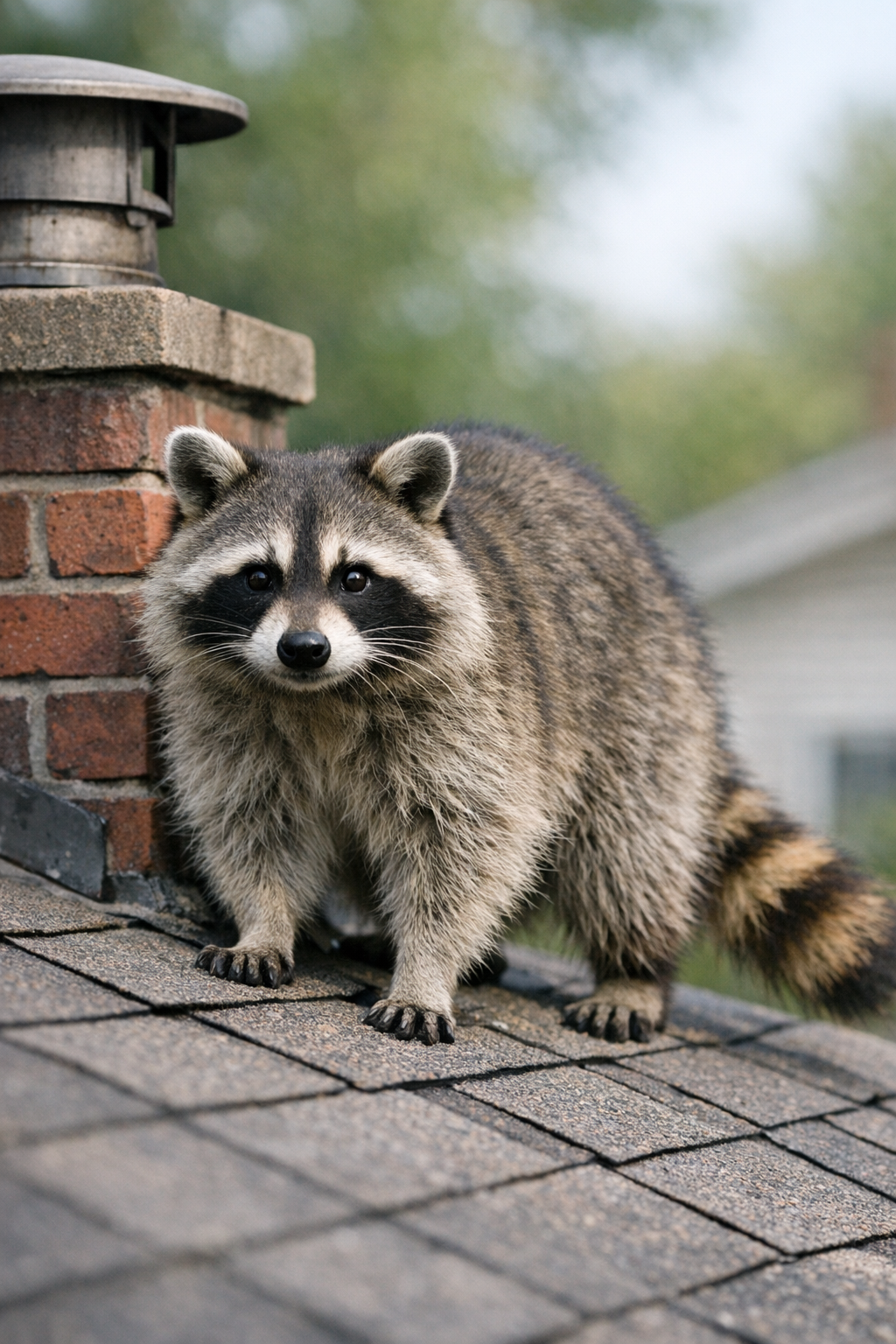
How to Get Rid of Raccoons in Your Attic: A Complete Guide
Hearing heavy thumping or scratching sounds in your ceiling at night? You might have a raccoon roommate. Raccoons are one of the most common—and destructive—nuisance animals to invade homes in North America. They are strong, intelligent, and persistent. If you suspect raccoons are in your attic, ignoring the problem will only lead to significant property damage and health risks.
Signs You Have Raccoons
Raccoons are much larger than rats or squirrels, so the signs of their presence are usually more obvious:
- Loud Noises: Unlike the light scampering of mice, raccoons sound like a heavy person walking in the attic. You may hear thumping, growling, or chattering, mostly at night.
- Structural Damage: Raccoons can rip open shingles, tear off fascia boards, and bend aluminum vents to gain access. Look for large holes in your roof or eaves.
- Staining: Urine stains on your ceiling or walls are a gross but common indicator.
- Latrines: Raccoons often designate a specific area as a toilet. Finding piles of droppings (which can resemble small dog poop) on your roof or near the home is a bad sign.
The Danger of Raccoons in the Attic
Beyond the noise, raccoons pose serious threats:
- Insulation Damage: They trample insulation, reducing its R-value, and soil it with urine and feces.
- Health Risks: Raccoon droppings can carry Raccoon Roundworm (Baylisascaris procyonis), the eggs of which are dangerous to humans and pets if inhaled or ingested. They can also carry leptospirosis and rabies.
- Fire Hazards: Raccoons often chew on electrical wiring, creating a significant fire risk.
Why You Shouldn’t Just Block the Hole
Many homeowners make the mistake of finding an entry hole and immediately boarding it up. Do not do this!
If you seal the hole while the raccoon is still inside, you will trap it. A trapped raccoon will cause immense damage trying to claw its way out—sometimes right through your ceiling into your living room. Worse, if there are babies inside (which is common in spring and summer), the mother will tear your roof apart to get back to them, or the babies will die inside, creating a terrible odor and fly problem.
The Humane Removal Solution
1. Inspection and Assessment
A professional will determine if babies are present. This changes the removal strategy completely.
2. Eviction Fluid or Trapping
In some cases, specific pheromone-based eviction fluids can encourage a female raccoon to move her litter on her own. In other cases, humane cage traps are set near the entry points or on the roof.
3. Exclusion Devices
A one-way door can be installed over the entry point. This allows the raccoon to leave the attic to forage for food but prevents it from getting back in. This is only used if we are certain there are no immobile babies inside.
4. Removing the Babies
If babies are found, they must be removed by hand (carefully!) and placed in a recovery box outside so the mother can retrieve them and move them to a backup den.
5. Cleanup and Repair
Once the animals are gone, the entry points must be sealed with steel flashing or heavy gauge mesh. The attic often needs to be sanitized and insulation replaced to remove biohazards and scent markers that attract other animals.
Raccoon removal is dangerous and complex. Raccoons are wild animals and can be aggressive when threatened. For your safety and to ensure the job is done right, contact a professional wildlife control service like HWCS.